


Blog
Specifications of genuine Russian wood to ensure durability on-site

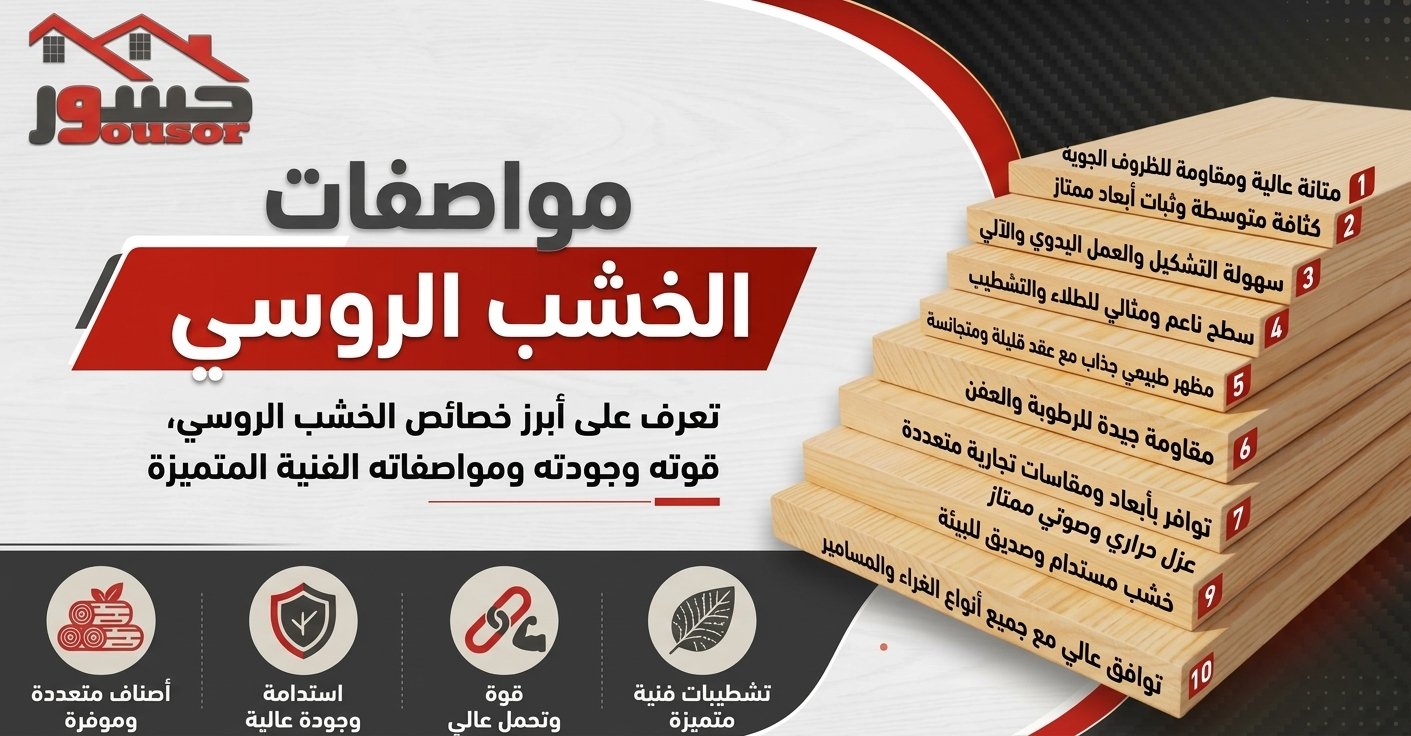
Specifications of Russian wood vary Depending on the type of wood, its quality grade, and manufacturing method, density, hardness, moisture content, and dimensions are among the most important selection criteria. Russian wood is used in carpentry, concrete formwork, and furniture, but supplying it to Saudi projects requires verification of technical specifications and regulatory documents to avoid shipment rejection by consultants. In this guide, we review the types, quality grades, SABER requirements, and the Saudi Building Code before purchasing. Learn more details here. gousorWood Shop
You can also contact us via WhatsApp to find out the most important details and prices for Russian wood from Jasoor Store.
What are the main characteristics of Russian wood?
The specifications of Russian wood include a range of technical characteristics that vary depending on the type and use:
- Density and hardness: vary between softwoods such as pine and hardwoods such as birch.
- Moisture content: affects dimensional stability and the likelihood of cracking and warping.
- Measurements: Including length, width, thickness and allowable tolerances.
- Quality grades: Determined according to the approved classification system and product characteristics.
- Moisture resistance: varies depending on the type of wood, treatment, and panel composition.
- Straightness: Twisting, curvature, knots and cracks should be checked.
Russian origin alone is not enough to prove quality; the specifications of Russian wood are compared to the technical standards required for each project.
To understand the basic differences between hardwoods and softwoods, you can consult the Natural Wood Types Guide.
What types of Russian wood are available in Saudi Arabia?
Russian white wood
Russian white wood includes softwood products such as pine and fir, and is used in carpentry and temporary construction according to the grade and specifications of the wood.
Uses of white wood include temporary structure work, wooden fittings, and some carpentry applications.
Russian birch wood
Russian birch wood is known for its hardness and light appearance, and is used naturally or in multi-layered panels.
Russian birch wood is known for its hardness and light appearance, and is used naturally or in multi-layered panels.
Its characteristics can be learned in detail through the article “Features of Birch Wood“.
Russian playwood
Plywood is made from layers of glued wood veneer, and its properties vary depending on the type of veneer, adhesive, and number of layers.
The specifications of Russian plywood are essential when used in cabinets, furniture, and concrete formwork.
What are the specifications and dimensions of Russian plywood?
Specifications for Russian plywood include board thickness, layer composition, surface finish, and type of adhesive.
Common sizes for some products are 1220 x 2440 mm and 1250 x 2500 mm, with thicknesses varying according to the manufacturer.
| needs to be checked | |
| Actual thickness | allowable toleran |
| crust to be uniform a | edges to be free of significant gap |
| Adhesive classification | and moisture resistance |
| Surface quality | acceptable defects |
| Tests | eports required for use |
The specifications of Russian plywood are determined by the product offered, not just the brand name.
These boards can be compared to the products shown in the plywood types guide, with plywood dimensions being checked when determining quantities.
What are the quality grades of Russian wood and how are they determined?
The quality grades of Russian wood vary depending on whether it is natural sawn wood or manufactured plywood.
Natural wood is checked for knots, cracks, straightness, and structural grade when necessary.
As for plywood, it may use face grade classifications such as BB and CP, which alone do not prove the board’s resistance to loads or water.
Therefore, the quality grades of Russian wood must be documented within the supplier’s technical specifications, and the classification standard used must be verified.
It is not correct to compare its grades directly with other woods without referring to the classification system; the advantages of Swedish wood can be used to understand the difference in product characteristics.
Is Russian wood resistant to water and moisture?
Not all products can be described as Russian waterproof wood; moisture resistance varies depending on the type, manufacturing, and finishing.
Some plywood boards may have adhesive bonds suitable for humid conditions, but they are still susceptible to water absorption, especially from exposed edges.
When choosing waterproof Russian wood, check the usage rating, test reports, and edge treatment, and do not rely on the phrase “waterproof” alone.
It should be noted that panel cladding systems also vary; this is illustrated by the specifications of melamine wood when comparing products used in furniture.
What are the specifications of the Russian wood used for concrete formwork?
Russian formwork timber is used in some temporary construction work, either in the form of sawn timber or plywood sheets suitable for concrete formwork.
Its suitability is determined by the expected loads, thickness, distances between support points, and condition of the wood.
When purchasing Russian timber for scaffolding, you should ensure that:
- Dimensions and grade conform to approved specifications.
- Bending resistance data is provided when required.
- The panels are safe from separation and damage.
- The product is suitable for the conditions of use.
- The intensity system is adopted and designed by specialists.
Not all Russian timber planks used for scaffolding should be considered equal in load-bearing capacity.
To learn about the different applications, you can review the uses of plywood.
How can you ensure that Russian wood meets the requirements of Saudi projects?
Reviewing the specifications of Russian wood requires distinguishing between regulatory compliance for import and technical approval within the project.
What is the role of the SABER platform and conformity certificates?
The Saber platform is used for product registration, conformity procedures, and issuing shipment certificates.
Product requirements vary according to its classification and applicable technical regulations; it may require a product conformity certificate or self-certification according to the specified path.
A certificate of shipment alone does not mean that the wood is accepted for construction use within the project.
What is the relationship to the Saudi building code?
The Saudi Construction Code SBC 302 addresses requirements related to temporary construction structures, formwork, inspection and testing of materials.
However, judging whether Russian wood meets specifications requires determining the actual use, reviewing the applicable requirements, and examining project documents.
How can you avoid having your shipment rejected by the consultant?
Before placing your purchase order, make sure of the following:
- Providing the product’s technical data sheet.
- The grade, thickness, and dimensions must conform to the contractual specifications.
- Provide the required test reports.
- Compliance with applicable import documents and SABER certificates.
- Submitting a Material Submittal application and obtaining consultant approval when required.
This can reduce the risk of shipment rejections and resupply costs.
What is the difference between Russian wood and manufactured panels?
The specifications of natural Russian wood differ from those of manufactured panels, especially in terms of composition and load-bearing capacity.
The panels shown within the MDF wood types consist of compressed wood fibers, while natural wood retains its fiber structure.
Flexible plywood is used in some curved applications, but it is not a direct replacement for structural panels.
The difference between MDF and melamine wood must be taken into account when choosing furniture panels and facades.
Knowing the uses of MDF wood also helps in identifying suitable alternatives for non-structural interior work.
What is the wholesale price of Russian wood in Saudi Arabia?
The wholesale price of Russian wood varies depending on the type, origin, thickness, quality grade, quantity, and shipping costs.
The specifications of Russian plywood also affect the cost of multi-layered panels.
When comparing the wholesale price of Russian wood, the unit of measurement and required specifications should be standardized, and then the supplier’s certificates should be reviewed.
Choosing the lowest-priced offer without checking the quality grades of Russian wood and the project requirements is not recommended.
How to inspect Russian wood before buying and receiving it?
To verify the specifications of the Russian wood before receiving the shipment, it is advisable to check the following items:
- Matching the type and origin with the purchase order.
- Review the thickness, dimensions, and tolerances.
- Ensure the surfaces and edges are safe.
- Check the moisture content when needed.
- Matching the shipment documents with the approved materials.
It is also advisable to review the wholesale price of Russian wood in relation to the required quality level, not as an independent criterion for purchase.
Frequently asked questions about the specifications of Russian wood
What is the difference between Russian birch wood and Russian white wood?
Russian birch is a hardwood, while Russian whitewood typically includes softwoods such as pine and spruce. The uses of each type vary depending on its properties and quality.
How can I determine the quality grade of Russian wood before buying it?
Check the classification standard, supplier information, and acceptable defects. The quality grades of Russian wood vary depending on the product type, so a first-class description without documentation is insufficient.
Is a SABER certificate sufficient for accepting Russian wood in Saudi projects?
No, SABER certifications relate to regulatory requirements applicable to the product and shipment, while project material approval requires a review of technical specifications and contractual requirements.
Is Russian wood suitable for concrete formwork?
Yes, suitable Russian wood products can be used for formwork after checking their strength, dimensions and condition, and adopting the formwork design according to the project requirements.
Summary
Knowing the specifications of Russian wood helps in selecting the appropriate type and grade for furniture, carpentry, and concrete formwork. However, successful supply to Saudi projects requires more than just matching dimensions; technical documents, applicable certificates of conformity, and material approvals must be verified before shipment.
Before issuing the purchase order, request the necessary technical specifications and test reports, and ensure that the product is approved by the project consultant to minimize the risk of shipment rejection.
You can also learn about: