

Blog
Advantages of American walnut wood for manufacturing luxury offices and decorations

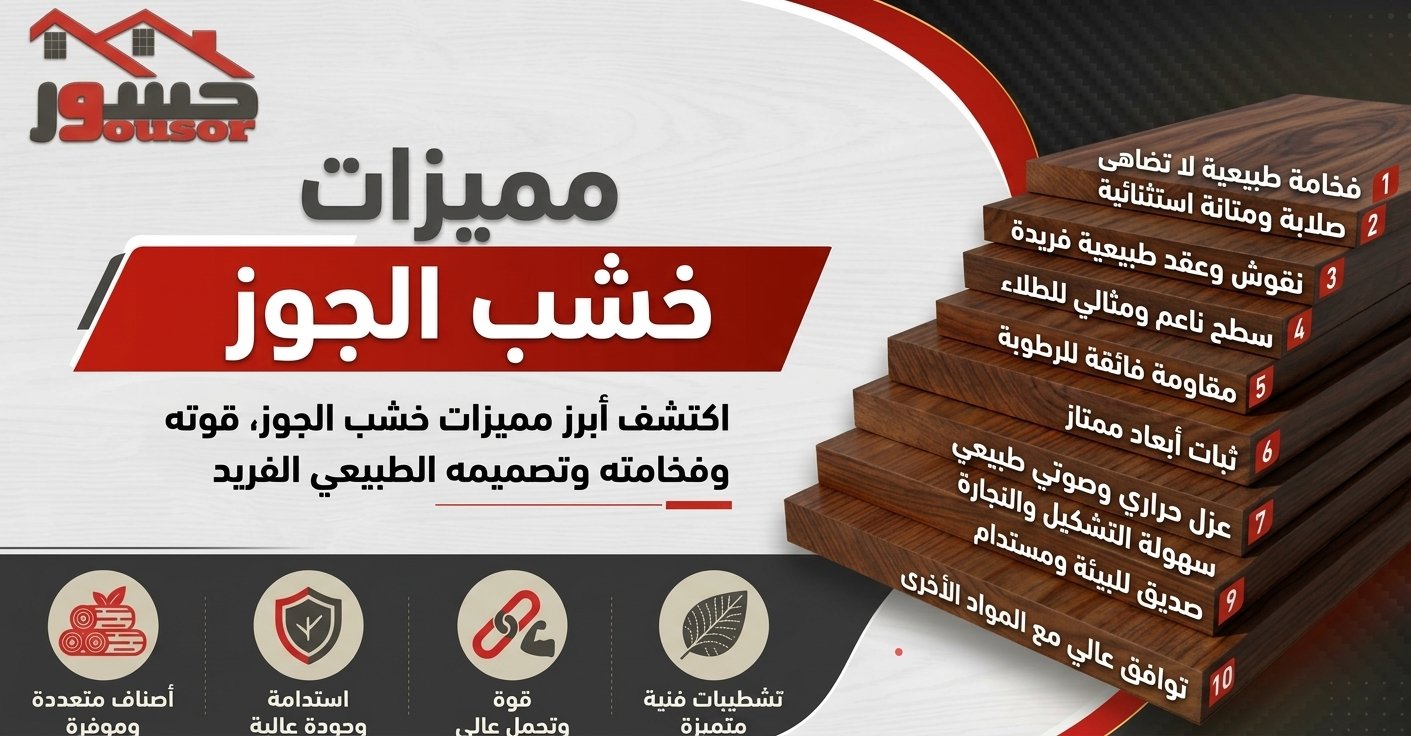
Walnut wood is a distinguished choice for executive office and luxury hotel design, combining a deep brown color, unique natural grain, durability, and ease of finishing. Its value in high-end projects increases when natural veneer is chosen and the grain is carefully coordinated, achieving a harmonious look without relying solely on expensive solid wood. We’ll explore the most important features and uses of walnut wood, how to choose the right type, and how to maintain its elegance for years to come. Learn more at [website/store name]. gousorWood Shop
You can also contact us via WhatsApp to learn the most important details, prices, and specifications of walnut wood for decoration from Jasoor Store.
What are the main advantages of walnut wood?
The advantages of walnut wood combine aesthetic and artistic qualities that make it suitable for luxury furniture and high-end architectural designs.
Its most prominent features include:
- Rich natural color: It features shades of brown ranging from light to dark chocolate, giving spaces a distinctive visual presence.
- Unique natural veining: Its undulations range from subtle lines to pronounced patterns that add an exclusive character to each piece.
- Durability: It has mechanical properties suitable for tables, cabinets and furniture used daily.
- Relatively good stability: It maintains its dimensions adequately when properly dried and manufactured.
- Ease of operation: It responds to cutting, shaping and sanding, allowing for the execution of fine details.
- Finishability: Its veins can be highlighted using appropriate oils, varnishes and finishes.
- Design diversity: It complements classic furniture and contemporary designs.
- Long-lasting value: Its appearance and some of its products can be maintained and refinished for decades depending on the quality of manufacturing and care.
The advantages of walnut wood are particularly evident when the material is chosen according to the nature of the use, and not based solely on color.
Its properties can be compared with other types of natural wood to determine the most suitable option for each project.
What is American walnut wood and what are its properties?
American Black Walnut is a hardwood extracted from Juglans nigra trees. It has an average dry density of about 610 kg/m³ and a hardness of approximately 1,010 lb-strength according to the Janka scale.
One of the most notable features of walnut wood is its relative ease of working and the variety of its grains, in addition to its elegant appearance.
What makes the luxurious color of walnut wood so special?
The luxurious walnut wood has a chocolate and dark brown color, and may have gray or reddish streaks that add visual depth.
The luxurious walnut wood color harmonizes with light marble, bronze metals, and warm lighting, making it suitable for executive offices and hotel lobbies.
These characteristics differ from the softwoods described in the article “Advantages of Swedish Wood,” especially in terms of appearance and uses.
What are the most important uses of walnut wood in luxury projects?
Natural wood has a variety of uses in architectural design, but walnut occupies a special place in spaces that rely on deep colors and sophisticated details.
Walnut wood for interior decoration
Walnut wood is used for interior decoration in wall cladding, office backdrops, reception units and doors.
The advantages of walnut wood become apparent when used in large spaces with a well-thought-out distribution of the grain and lighting.
Further options can be explored through the guide to types of wood used in decoration before adopting materials.
Modern walnut wood table
A modern walnut wood table gives meeting rooms and executive offices a look that combines simplicity and luxury.
It can be made from solid walnut or using a natural veneer on a suitable support board.
When choosing a modern walnut wood table, the dimensions, stability of the base, grain pattern, and quality of the finish should be taken into consideration.
Walnut wood in luxury hotels
The advantages of walnut wood include its suitability for designing reception desks, closets, cladding, and hospitality units.
Uniformity in color tones and vein direction helps to present a consistent visual identity across different spaces.
What is the difference between solid walnut wood and natural walnut veneer?
The choice between solid walnut and natural veneer is a key decision in large projects.
Solid wood is suitable for tables and some parts that require a full material, while natural walnut veneer provides an authentic surface that can be applied to manufactured panels.
| Comparison | Solid | natural walnut shell |
| The composition | natural wood, | support board. |
| The cost is higher | often relatively lowe | arger spaces. |
| The cost is higher, | often relatively lower | arger spaces. |
| Usage | olid parts | and facades |
| Maintenance | thickness and finish, | veneer thickness and finish. |
One of the advantages of using walnut veneer is reducing the consumption of solid wood while maintaining a natural appearance.
Natural walnut wood veneer is used over various types of panels, and the properties of the available bases can be identified through the MDF wood types guide.
How do you get consistent walnut wood grain in large projects?
How do you get consistent walnut wood grain in large projects?
It can be treated by selecting natural walnut wood veneer and arranging its slices according to known matching techniques.
Book Matching Technology
It relies on alternating inverted layers of adjacent cortex to obtain symmetrical veins resembling the pages of an open book.
It is suitable for distinctive walls and executive tables.
Slip Matching Technology
تعتمد على ترتيب شرائح القشرة المتتابعة بالاتجاه نفسه، مما ينتج نمطًا متكررًا وأكثر هدوءًا.شIt relies on arranging successive cortical segments in the same direction, producing a more repetitive and calmer pattern.
It is suitable for spacious interiors and offices with a simple design.
Sequence Matching Technology
They are used to coordinate the veining between adjacent panels, so that the visual transition appears uniform across walls and cabinets.
For best results, actual samples should be used and the direction of the veins and the locations of the joints should be determined before manufacturing.
Reviewing the dimensions of plywood also helps in planning load-bearing panels and reducing waste when implementing cladding.
These steps allow us to take advantage of the advantages of walnut wood without requiring the use of solid wood in all parts of the project.
How durable and long-lasting are walnut wood panels?
The durability of walnut wood panels is related to the type of product, its thickness, and the quality of its manufacture.
Solid wood provides natural mechanical properties, while veneered panels depend on the load-bearing board, joints, and finish.
The durability of walnut wood panels makes them suitable for many interior furniture applications when specifications are chosen that match the intended use.
A distinction must be made between solid wood and multi-layered panels, as described within the types of plywood.
One of the advantages of walnut wood is the possibility of re-treating some solid surfaces, while the thickness of the veneer limits the amount of sanding that can be done for veneered panels.
Does the color of walnut wood change due to sun and humidity?
Yes, the color of fine walnut wood may change over time as a result of exposure to light, and some darker shades of walnut may become relatively lighter.
Humidity also affects dimensions and finishes, especially when stored or used improperly.
To preserve the aesthetic qualities of walnut wood, it is recommended to use suitable finishes, minimize direct sun exposure, and clean surfaces with gentle materials.
When comparing veneered alternatives, knowing the specifications of melamine wood helps to understand the differences in finishing surfaces and maintenance requirements.
What is the difference between walnut wood and manufactured wood panels?
Natural walnut is distinguished by its authentic grain, while manufactured panels offer a variety of options in terms of cost, stability, and finish.
Natural walnut wood veneer is used on some panels to achieve a luxurious look for large spaces.
A distinction must be made between natural veneer and products printed with a walnut pattern, and the difference between MDF and melamine can be reviewed to understand the differences.
Flexible plywood may be suitable for some curved cladding when its specifications allow.
This allows for combining the advantages of walnut wood with the design flexibility of manufactured panels.
How much does American walnut wood cost in Saudi Arabia?
The price of American walnut wood is determined by the wood grade, thickness, width, grain pattern, and import and supply costs.
The cost may increase when choosing wide solid panels or uniform color gradients for a large project.
The price of solid American walnut differs from that of natural veneer and veneered panels, so the unit of measurement and specifications must be determined before comparison.
The cost can be reduced by using veneer in large areas, with solid materials reserved for appropriate elements.
Plywood can also be used to select load-bearing panels in some cladding works.
How to choose the right walnut wood for a luxury project?
To fully benefit from the advantages of walnut wood, the following steps should be followed:
- Determine the color tone and vein pattern to match the architectural identity.
- Choosing solid or veneer depends on the element’s function and budget.
- Approving actual samples before starting manufacturing.
- Determining the method of matching the veins and the sequence of the panels.
- Review the specifications of the load-bearing board and the finish.
- Agree on quality and maintenance standards before supply.
Knowing the uses of MDF wood helps in evaluating some panels that carry natural veneer.
When considering the price of American walnut wood, one should also take into account waste, installation and finishing costs, not just the cost of materials alone.
Frequently asked questions about the characteristics of walnut wood
Why is walnut wood preferred for offices?
Walnut is preferred for executive offices because of its rich color and natural grain, which lends a sophisticated presence to the design. Its properties also allow for tables, cladding, and cabinets to be finished in a variety of ways, with the natural veneer being used to create visual harmony in large spaces.
Does the color of walnuts change due to the sun?
Yes, natural walnuts may change color due to continuous exposure to light, especially ultraviolet light. The rate of change can be slowed by using appropriate finishes and providing shade, but discoloration over time cannot be completely prevented.
What is the best way to incorporate it into modern design?
Walnut wood can be used in interior design with light marble, glass, and dark metals, opting for simple geometric lines. A modern walnut table also adds an elegant focal point to offices and meeting rooms without the need for elaborate decorations.
What are the prices of walnut-covered MDF?
The prices of MDF panels veneered with natural walnut vary depending on panel thickness, veneer type and grade, grain pattern, and finishing quality. An accurate price cannot be determined without the supplier’s specifications and pricing date. It’s also important to distinguish between natural veneer and walnut-patterned finishes.
The advantages of walnut wood combine a rich natural color, distinctive grain, durability, and malleability, making it a sophisticated choice for executive offices, hotels, and luxury projects.
The highest investment value is achieved when balancing solid walnuts with natural husks, with sample approval and vein direction planning before implementation.
To achieve a result that reflects the identity of your project, start by choosing the right material and adopting the veining and finishing pattern before supply.