

Blog
Types of kitchen wood and their prices

Types of Kitchen Wood and Their Prices: A Comprehensive Guide to Choosing the Best Material for Your Kitchen
Choosing the right kitchen material is just as important as its design or colors, because the type of wood used directly affects the kitchen’s lifespan, its resistance to moisture and heat, and its ease of maintenance. With so many options on the market, the search for… Types of kitchen wood and their prices A crucial step before making a purchasing decision, whether for individuals, contracting companies, or furniture manufacturers.
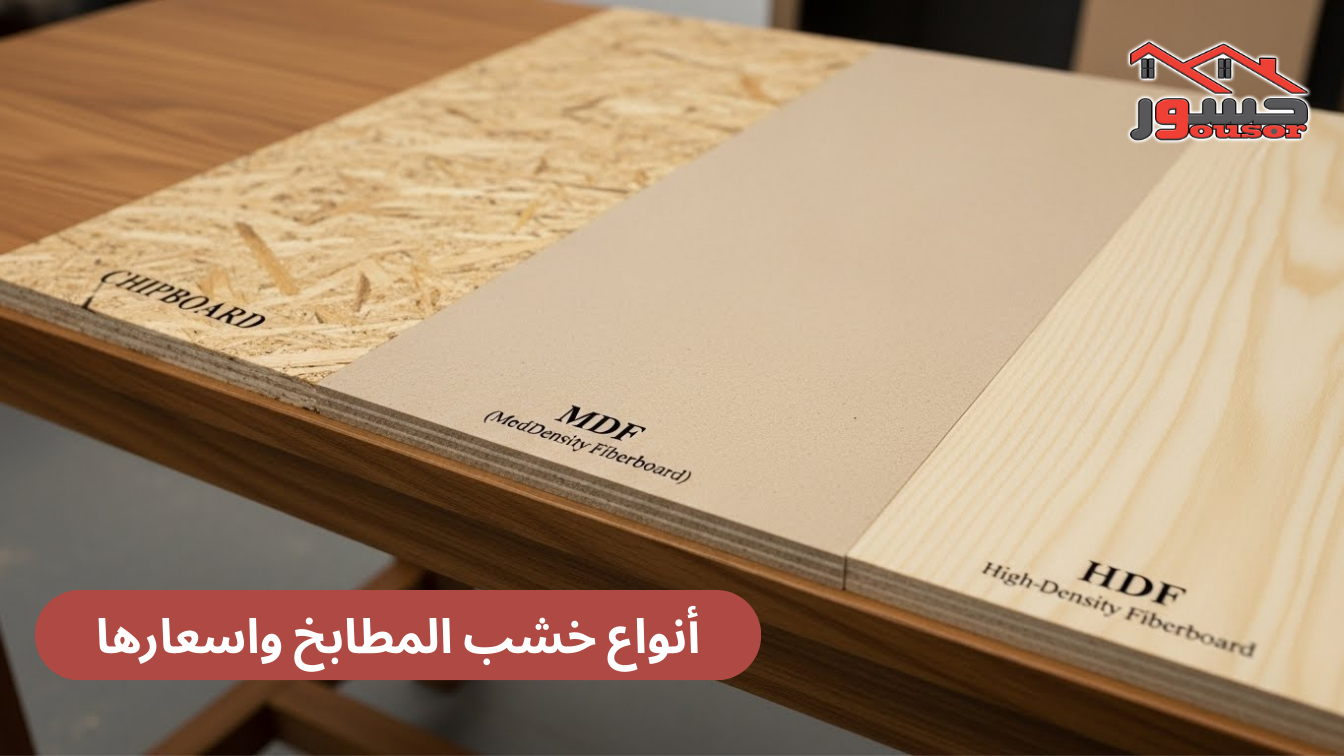
In this comprehensive guide, we provide a detailed overview of the various types of kitchen wood and their prices. We explain the differences between popular materials—such as chipboard, MDF, and HDF—and answer frequently asked questions to help you select the best wood for your kitchen based on your specific needs and budget, drawing on the expertise of Jusoor Store as an importer of premium natural and engineered woods.
Why is choosing the right type of wood for the kitchen essential?
The kitchen is one of the most frequently used areas in the home, and it is exposed daily to:
- Humidity
- the heatthe heat
- Steam
- Intensive use
Therefore, choosing the wrong type of wood can lead to rapid deterioration, swelling of the panels, or weakened hinges. This highlights the importance of understanding the different types of kitchen wood and their prices before—not after—proceeding with the project.
Types of Kitchen Wood and Their Prices: An Overview
When discussing the types of wood used for kitchens and their prices, we find that the materials employed are often not solid natural wood, but rather engineered wood products characterized by stability, affordability, and ease of shaping.
The most common types used in kitchens:
- HDF wood
Each type has different characteristics that affect price, quality, and longevity.
First: Chipboard and its use in kitchens.
What is chipboard?
Chipboard is a type of engineered wood made from compressed wood shavings and adhesives; it is considered an economical option when comparing kitchen wood types and prices.
Advantages of chipboard:
- Advantages of chipboard:
- Advantages of chipboard:
- Suitable for interior kitchen structures.
- Easy to cut and shape.
Easy to cut and shape.
- Less moisture resistant
- It is not recommended to use it uncovered.
- It needs good packaging (PVC or HPL).
Chipboard is often used for the interior body of the kitchen rather than the fronts, and is a suitable option for those looking for a balance between price and use.
Second: MDF wood in kitchens
What is MDF wood?
MDF wood is a wood panel made from fine compressed wood fibers, and it is one of the most common materials when talking about types of kitchen wood and their prices.
Advantages of MDF wood:
- Very smooth surface
- Ideal for painting and packaging
- Sleek and modern look
- It withstands daily use well.
Disadvantages of MDF:
- It is affected by water if untreated.
- It is affected by water if untreated.
For this reason, MDF is a popular choice for kitchen cabinet fronts, especially when properly wrapped or finished with moisture-resistant paint.
Third: HDF and its use in kitchens.
What is HDF wood?
HDF is a higher-density version of MDF, characterized by greater durability and a harder surface; it is considered a premium option among the various types of kitchen wood available on the market.
Advantages of HDF wood:
- high density
- Better moisture resistance
- Longer lifespan
- Suitable for high-intensity kitchens.
Disadvantages of HDF wood:
- More expensive than MDF
- heavier
HDF wood is typically used in luxury or commercial kitchens that require extra durability.
Which is better, MDF or HDF wood?
This is one of the most common questions when comparing kitchen wood types and their prices.
The answer depends on the usage:
- MDF is suitable for ordinary home kitchens
- HDF is best for kitchens with high usage and high humidity.
If the budget allows, HDF is a stronger and more durable option in the long run.
What is the difference between MDF and HPL wood?
Some people confuse MDF and HPL, but the difference is fundamental:
- MDF: Manufactured wood panel
- HPL: Coating layer (high-pressure laminate)
MDF wood is often used as the base, then covered with an HPL layer to increase its resistance to moisture and scratches. This combination is very common in modern kitchen designs.
What is the best type of wood for the kitchen?
There is no one answer that suits everyone, but generally speaking:
- For limited budgets: Chipboard with good packaging
- For medium use: MDF wood
- For high-end use: HDF wood
Choosing the best type of wood for the kitchen depends on:
- Nature of use
- humidity level
- Budget
- Quality of packaging and execution
A quick comparison between types of kitchen wood and their prices
This comparison will help you understand the types of kitchen wood and their prices in a practical way.
Important tips before choosing kitchen wood
- Don’t choose based on price alone.
- Ask about the thickness of the panels.
- Ensure the quality of the packaging.
- Choose a reliable supplier
This highlights the importance of dealing with a specialized store like Jousour, which provides high-quality natural and manufactured wood with approved specifications.
Why is Jasour Store your best choice for buying kitchen wood?
The Jisr store is distinguished by:
- Wide variety of wood types
- Direct import from the best countries
- Consistent quality and precise specifications
- Supplying furniture factories and contracting companies
Jusoor’s experience makes it a reliable reference for anyone looking for types of kitchen wood and their prices with guaranteed quality.
Knowing the types of wood used in kitchens and their prices is an essential step to ensure a practical kitchen that lasts for many years.
Whether you choose chipboard, MDF, or HDF, quality and proper execution are the most important factors.
Choosing the right wood from a trusted supplier like Jousour Store ensures you have a kitchen that is durable, stylish, and suitable for your daily needs without future surprises.